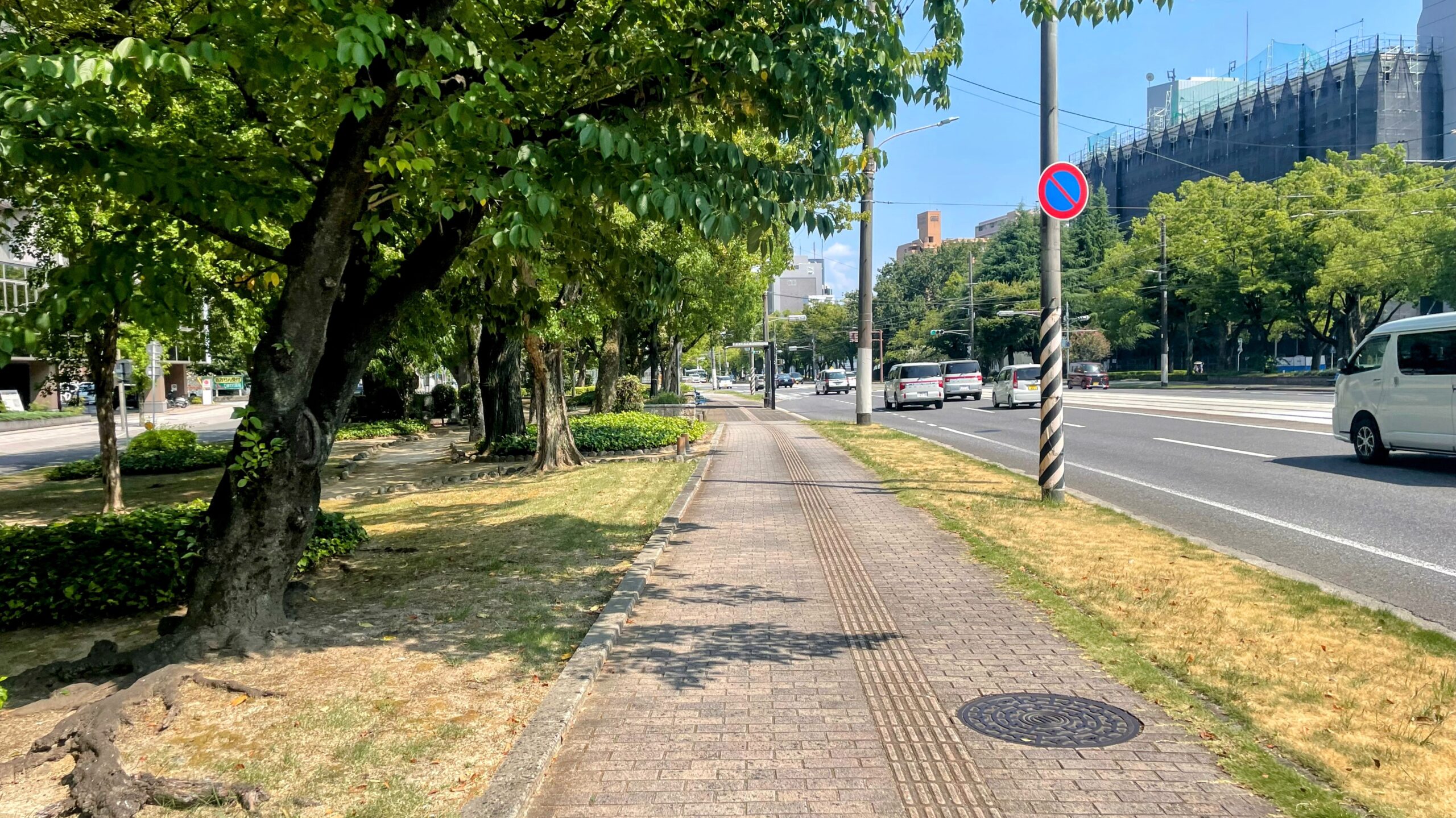
I don’t actually remember my parents telling me, over and over, “take your trash home with you.”
And yet, somehow, I grew up believing that
whatever trash you make while you’re out, you take it home yourself.
I remember packing a plastic bag on school trips and family vacations, just in case we ended up with garbage to deal with.
If there was no trash can at a park or a tourist spot, you didn’t leave your trash behind — you brought it home with you.
Wrappers from snacks or food bought at a convenience store? Same thing. Throw them away if there’s a bin. If not, take them home.
At the time, I never thought of this as “Japanese culture.” It was just what you did.
We Cleaned Our Own School
Looking back now and trying to figure out where this came from, I keep coming back to my elementary school days.
At my school, we had cleaning time every day after lunch.
In the classroom, we wiped down the blackboard, swept the floor, and wiped the floors with cloths.
We cleaned the hallways, too.
We even cleaned the bathrooms ourselves.
Outside, sometimes we’d pick up fallen leaves.
Of course, we were elementary schoolers, so it’s not like everyone took cleaning time seriously every single day. Some of the boys would occasionally skip out on cleaning to go play instead. When that happened, the girls would call them out:
“Hey, actually clean!”
I was more the type watching that unfold than the one doing the scolding.
But basically, the idea was simple:
you clean the school you use every day, yourselves.
That was just normal school life to me. And it wasn’t some unique experience I happened to have. According to materials from Japan’s Ministry of Education, Culture, Sports, Science and Technology, schools across the country widely set aside time for students to clean together, covering not just classrooms but hallways and bathrooms as well.
Leave It More Beautiful Than You Found It
There’s another phrase I remember from childhood:
“Leave it more beautiful than you found it.”
We were taught this phrase on school trips and outings — it meant cleaning up whatever place you’d used before you left.
Picking up the trash from your own lunch box.
Checking around to make sure nothing was left lying on the ground.
And leaving the place cleaner than when you arrived.
As a kid, I didn’t think about this too deeply. It was just “what you did.”
But looking back now, I think there’s something these two things have in common — cleaning the school every day, and taking your trash home when you’re out.
Both come down to the same idea:
you clean up after yourself, wherever you’ve been.
Now, I can’t say for certain that cleaning school directly caused me to take my trash home. But I think experiences like that, repeated over and over, became part of that instinct in me — the sense that you leave a place the way you found it, or better.
What If There’s No Trash Can?
So what do I actually do when I’m out somewhere and there’s no trash can?
Honestly, I don’t think twice about it.
I take it home.
Even now, on days when I know I’ll probably end up with trash — like if I’m planning to eat out somewhere — I’ll sometimes bring a small plastic bag with me.
I don’t carry a trash bag around all the time. But my thought process isn’t “what am I going to do if there’s no trash can?” It’s more like, “well, I’ll just take it home, then.”
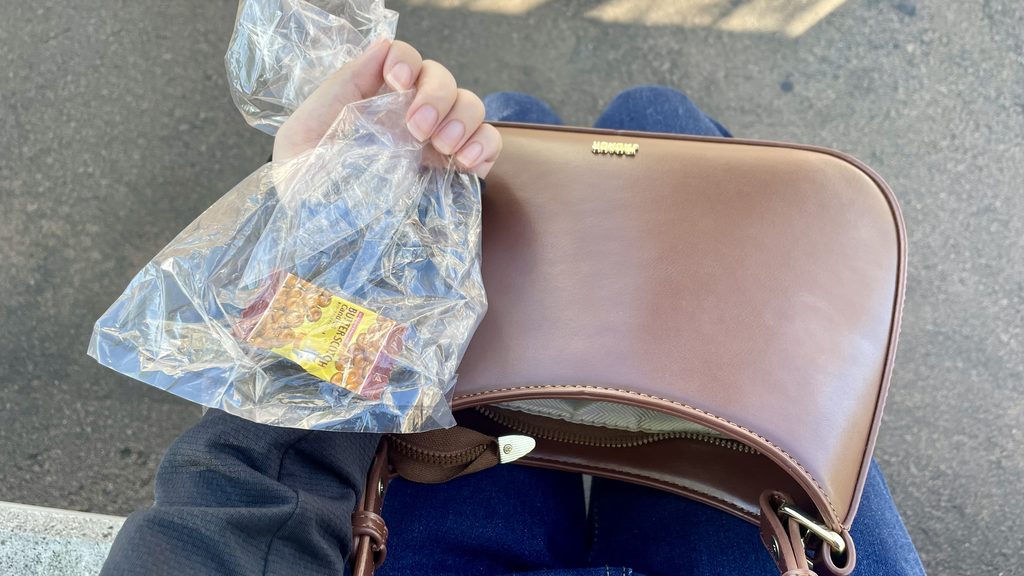
Japan’s National Tourism Organization (JNTO) actually gives travelers similar advice: since public trash cans can be limited in certain areas, visitors are encouraged to carry a small bag for their trash and hold onto it until they reach a proper place to dispose of it.
In other words, what I’ve been doing since I was a kid turns out to be similar to the travel etiquette recommended in Japan today.
So Why Are There So Few Trash Cans in Japan?
Here’s where the story shifts a bit.
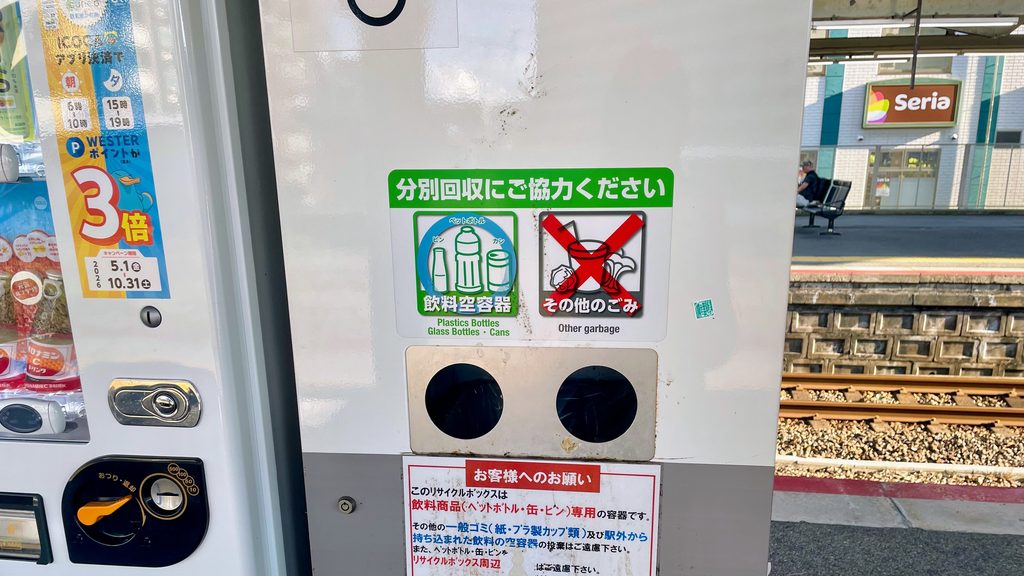
“There are hardly any trash cans in Japan” is something that tends to genuinely surprise visitors from abroad. And it’s true — there are plenty of public spaces in Japan where you’ll notice a distinct lack of bins.
There are a few reasons behind this.
After the 1995 Tokyo subway sarin attack, security was tightened across public transportation, including measures like more surveillance cameras and increased patrols.
That said, it would be too simple to say “the sarin attack is why Japan doesn’t have trash cans.” Where bins are placed, how they’re managed, how waste disposal systems work, and how people actually behave — a lot of factors are tangled up in this.
For what it’s worth, the shortage of trash cans never struck me as much of a problem. My attitude was always: if there isn’t one, I’ll just take it home.
Going Abroad Made Me Notice How Clean Japan Actually Is
I felt the difference most clearly the first time I traveled abroad.
Walking around, I noticed trash on the ground fairly often. Of course, this varies a lot by country and region — and Japan certainly has places with litter, too.
But for someone used to everyday life in Japan, it was eye-opening. I remember thinking, “Japan is actually cleaner than I realized.”
When you live in Japan, you don’t really register how clean the streets tend to be — it’s just your normal. It took going abroad for me to actually notice the environment I’d always taken for granted.
Something That Caught My Attention at the 2026 World Cup
At the 2026 FIFA World Cup, footage of Japanese fans picking up trash in the stadium after matches made headlines abroad.
Reuters reported that after Japan’s match against Tunisia in June, Japanese supporters were seen collecting garbage in the stands at the stadium in Monterrey.
When I saw that story, what actually surprised me wasn’t that Japanese fans were cleaning up. It was realizing, “oh — this is the kind of thing that becomes news outside Japan.”
To me, cleaning up after yourself was never something especially remarkable. Having grown up with “leave it more beautiful than you found it,” it just felt like a fairly ordinary thing to do.
To Be Clear — Not Every Japanese Person Does This
I don’t want this to come across the wrong way.
Littering exists in Japan, too. Not every Japanese person follows this kind of etiquette.
Honestly, when I see littering in Japan, I find myself thinking, “why would you bother throwing it there?” It genuinely bothers me a little.
But I don’t think this comes down to some simple idea like “Japanese people are just naturally tidy.” For me personally, it comes back to something I picked up as a kid: the sense that whatever trash you make, you’re the one who deals with it.
So, Why Do Japanese People Take Their Trash Home?
Back to the original question.
Why do Japanese people take their trash home with them?
I don’t think there’s a single, tidy explanation.
The shortage of trash cans is part of it. So is the way waste sorting and disposal systems work.
But looking at my own life, it goes deeper than that. I grew up:
- cleaning the school I used, alongside my classmates
- being taught to “leave it more beautiful than you found it” on school trips
- cleaning up my own trash whenever I was out
None of it was ever presented to me as a special rule. It was just “what you did.”
So even now, if there’s no trash can around, my instinct is still, “well, I’ll just take it home, then.”
For me, taking my trash home isn’t some distinctly “Japanese” virtue — it’s just an ordinary habit I’ve carried with me since childhood.
What About Where You’re From?
There are probably plenty of habits that feel completely normal to Japanese people but look strange from the outside.
And I’m sure the reverse is true, too — things that feel totally ordinary to you might seem surprising to someone in Japan.
So, what’s it like where you’re from?