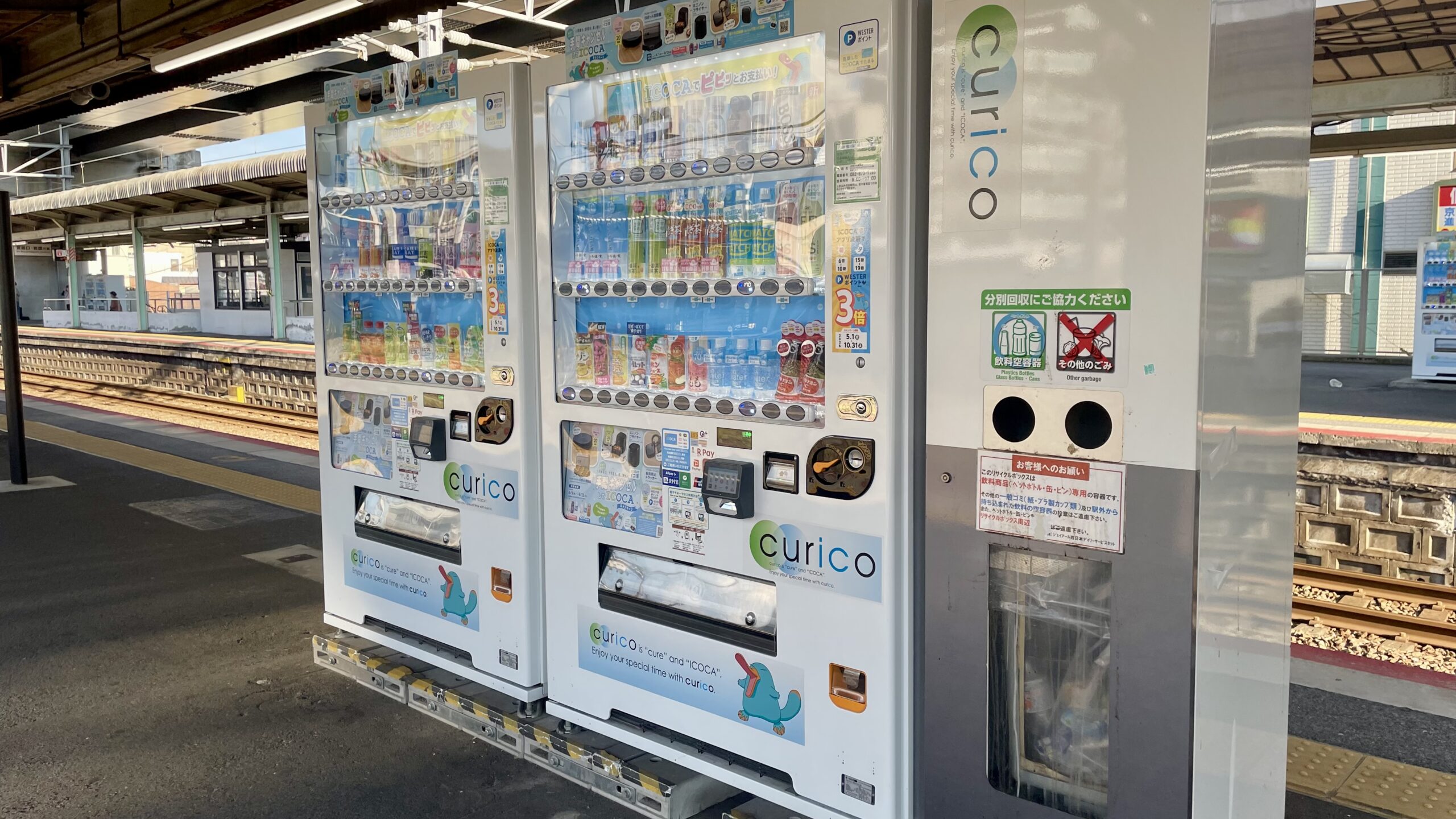
If you’ve traveled through Japan, you’ve probably noticed them everywhere. On quiet residential streets, outside train stations, at the edge of a rice field with nothing else around. A glowing box of drinks, standing alone, working fine at 11pm with nobody watching it.
For a lot of first-time visitors, this is one of the earliest “wait, why does this exist here” moments about Japan. Vending machines show up in places that would never make sense back home, and there are so many of them that it’s hard not to wonder what’s going on.
But here’s the part that tends to get lost in “Japan has amazing vending machines!” articles: for most Japanese people, they’re not that exciting. They’re just there. Ordinary. The kind of thing you walk past every day without thinking twice about it.
That gap, between how striking vending machines look to a visitor and how little most people here actually think about them, is really what this article is about.
Vending Machines Aren’t a Big Part of Daily Life for Most Japanese People
I don’t actually use vending machines very often. If I’m being honest, they’re not really part of my routine at all.
My default is a convenience store or supermarket. There’s more to choose from, and the price is usually the same or cheaper. A vending machine tends to come into the picture when neither of those is nearby and I’m genuinely thirsty, not before.
On a really hot day, that usually means grabbing something cold on the spot. In winter, I’ll sometimes go for a warm can of coffee or tea, and honestly, part of the appeal is just holding something warm in my hands, not only drinking it.
That’s really the extent of it. It’s not a habit, and it’s not something I think about unless I actually need it.
Which is worth saying clearly, because a lot of content aimed at international readers implies that vending machines are a daily fixture in Japanese life. For many people here, they’re closer to a backup option: useful when you need one, invisible the rest of the time.
So Why Does Japan Have So Many of Them?
This is where it gets more interesting, and the answer isn’t just one thing.
According to the Japan Vending System Manufacturers Association (JVMA), Japan had about 3.91 million vending and automated service machines in operation at the end of 2024, with beverage machines making up the largest share at roughly 2.2 million units. That’s still an enormous number for a country this size, even though it’s actually down from a peak of more than 5.6 million machines around the year 2000.
A few things came together to make this possible.
One is a level of trust in public space that’s genuinely unusual. Low rates of vandalism and theft mean a company can leave a machine full of cash and product on a sidewalk, with no security gate around it, and reasonably expect it to still be fine the next morning.
Another is what a machine lets a business do without hiring anyone. It can sell around the clock, get restocked every few days, and sit in a spot too small or too quiet to justify an actual shop with staff.
A train platform, a factory break room, the edge of a hiking trail — these are places where a store doesn’t make sense, but a machine does.
And there’s a simpler piece of the story too: Japan started early and kept going. Coin-operated machines have existed here since the early 1900s, and the market grew steadily through the postwar decades as coin currency standardized and drink brands expanded. By the time convenience stores became common, vending machines were already part of the landscape.
No single factor explains it on its own. It’s history, business logic, and public trust, layered on top of each other over a long time.
Where You Actually Find Them
The machines that get photographed for overseas audiences are usually the unusual ones. But the ordinary placements say more about how they’re actually used.
Schools often have them. I remember drink vending machines near the entrance of my own school, mostly used before or after club activities.
They also turn up in places that seem to have nothing around them at all.
I’ve come across vending machines out in the countryside, somewhere so empty I genuinely wondered who would ever stop there to buy something. No houses nearby, no other shops, just a machine standing by the road.
It’s one of those things that still catches me off guard a little, even though I grew up seeing vending machines everywhere.
That’s really the pattern behind where they show up: wherever a convenience store wouldn’t be worth building.
Choosing Hot or Cold Depending on the Season
One small but very real habit: what you buy from a vending machine changes with the weather.
In summer, it’s about finding something cold as fast as possible, especially somewhere without much shade.
In winter, plenty of machines switch over to selling hot drinks too, marked with a red label instead of the usual blue.
A warm can becomes as much about warming up your hands on a cold day as it is about the drink itself, which is honestly one of my favorite small things about winter here.
The Unusual Machines You’ll Sometimes Come Across
This is the part that tends to dominate articles about Japanese vending machines, and it’s not entirely without reason. Some of them really are unexpected.
Ice cream vending machines show up at schools, sports facilities, and hotels, built to keep products frozen without needing a staffed freezer counter nearby.
More recently, small bakeries and dessert shops have started using frozen vending machines to sell whole cakes or slices, which lets a shop sell outside normal business hours without anyone on site.
These machines are real, and they’re a genuinely distinctive part of the landscape.
But it’s worth keeping the scale in perspective. They’re a small, specialized slice of a market that’s still overwhelmingly made up of ordinary drink machines.
Ordinary drink vending machines are still the norm here, not the exception, and that’s easy to lose sight of when the unusual ones are what get shared online.
The Vending Machine Landscape Is Actually Shrinking
Here’s something that might surprise readers who assume the number only grows: it’s actually been declining for years.
JVMA data shows the total count has dropped fairly steadily since that 2000 peak, and industry reporting points to a few overlapping reasons.
Convenience stores, especially the coffee and hot food counters they’ve built out over the past decade, now compete directly with what vending machines used to offer.
Japan’s shrinking, aging population means fewer potential customers in some areas to begin with.
Rising costs for drinks and restocking, combined with a shortage of delivery drivers to service machines in less profitable spots, have pushed some beverage companies to shut down thousands of unprofitable units at once.
I’ll be honest, though: I haven’t personally noticed this in day-to-day life. The machines I’m used to seeing still seem to be there.
That’s just my own impression, not a claim about the national trend. The industry numbers tell a clearer story than my own casual observation ever could, and I think it’s worth keeping those two things separate rather than blending them together.
What Vending Machines Actually Mean, Day to Day
If there’s one thing worth taking from all this, it’s less about the machines themselves and more about what they represent in daily life here.
I don’t think about vending machines as a symbol of anything.
They’re closer to a streetlight in my mind: useful in the moment, easy to forget the rest of the time.
That’s probably the most honest way to describe what they are for most people living here.
Not a cultural spectacle.
Just infrastructure that happens to also sell you a cold drink on a hot day, or a warm one on a cold one.
Conclusion
None of this makes vending machines any less interesting to look at from the outside. It just means the interesting part isn’t really the machines themselves.
Sometimes the most interesting thing about something in Japan is how ordinary it feels to the people who live there.