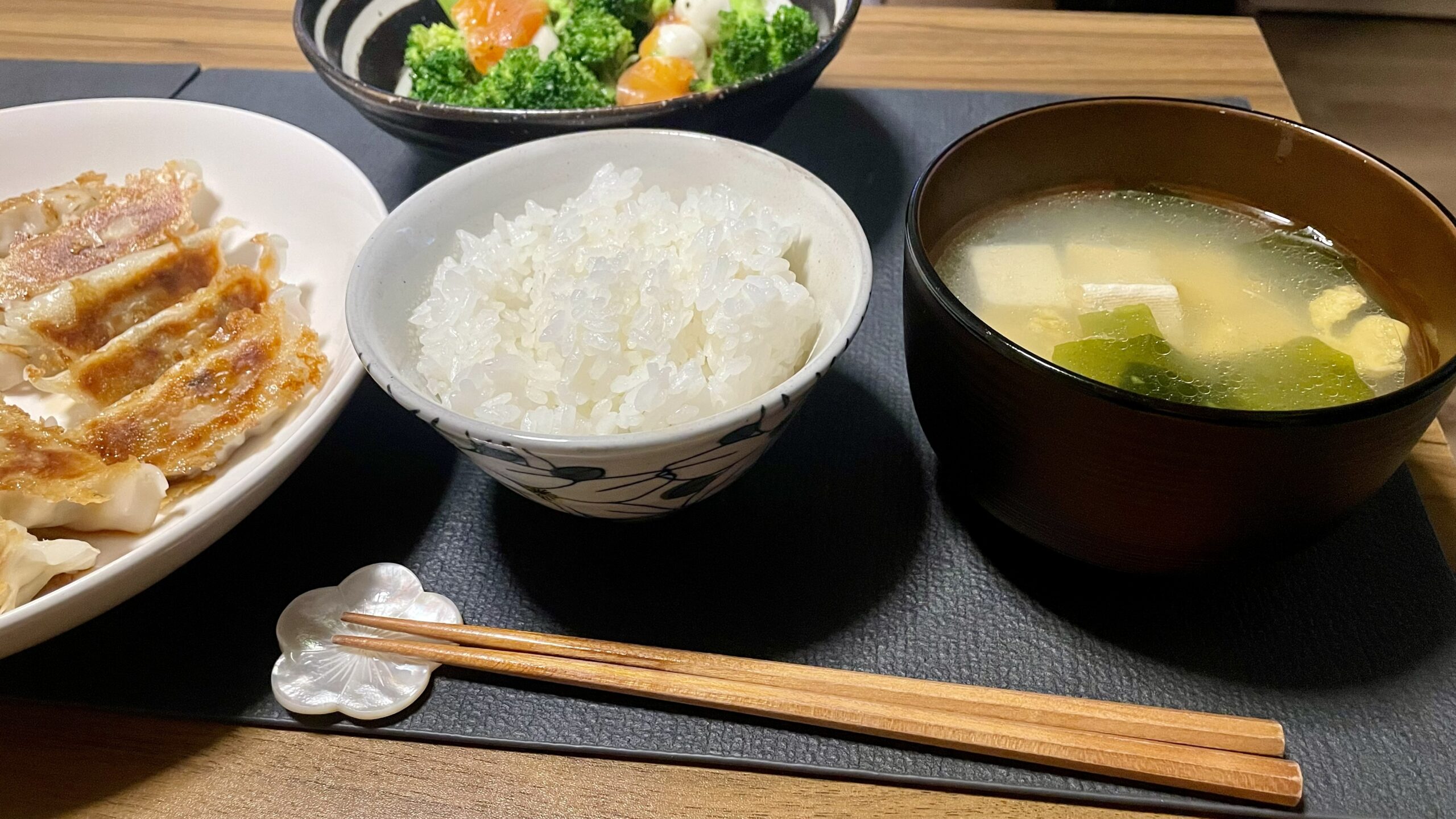
Most nights, I cook three cups of rice. For me, rice in Japan is not something special or reserved for certain meals— it’s just what fits our rice cooker, and what’s left over after dinner goes into the freezer for another day. That’s really the whole story of rice in my house. It’s not a special event. It’s just there, every evening, the way bread might be on someone else’s table.
I think that’s what people don’t always picture when they imagine “Japanese food.” Rice isn’t a dish I plan around. It’s more like the quiet part of the meal that everything else sits next to.
Rice Is Part of My Everyday Dinner
I cook rice almost every day. It’s usually the base of dinner rather than a separate thing I think about — I don’t sit down and eat a bowl of plain rice on its own. It’s there alongside whatever else I’m making that night.
Three cups is my usual amount. Some of it gets eaten right away, and some doesn’t. I’m not trying to calculate the exact number of servings; I just make enough that there’s a little extra, because extra rice is genuinely useful the next day.
What I Eat With Rice
On an ordinary night, rice sits next to a main dish and maybe a side or two. I’ll often sprinkle furikake over it, or eat it with natto if that’s what I’m in the mood for. A bowl of miso soup next to it is common in my house — honestly, rice and miso soup together is my favorite combination. I’m not saying every household in Japan eats it exactly this way, but for me, that pairing just feels right.
Rice also shows up in other forms. Sometimes it’s a donburi — rice with something like meat, egg, or vegetables served on top in one bowl. Sometimes it’s fried rice, especially when I want to use up what’s already in the fridge. It’s less “a food” and more a format that other food gets built around.
If you’re curious about the phrase commonly used before a meal in Japan, “itadakimasu” is a familiar expression used before eating — you can read more about why Japanese people say itadakimasu before eating.
What Happens to Leftover Rice?
I don’t like to waste rice, so leftovers usually get wrapped in plastic wrap and frozen while it’s still warm and fresh. That way, I can just microwave a portion later without it drying out. Sometimes, if I know I’ll eat it within a day, I refrigerate it instead of freezing it.
That leftover rice doesn’t just sit there, either. It often becomes fried rice a day or two later — a fast way to turn small amounts of cooked rice into an actual meal instead of throwing it out.
Rice Can Be Lunch, Too
Rice isn’t only a dinner thing for me. Sometimes I make onigiri — rice shaped into a triangle or ball, often with something like a pickled plum or salmon tucked inside, then wrapped in a sheet of nori — and take it to work for lunch. It’s portable, it doesn’t need reheating, and it uses rice I’ve already made.
For me, onigiri is simply one practical way to turn rice into an easy lunch. It’s widely available across Japan, too — from home kitchens to convenience stores — but for me it’s less about trying something new and more about making use of rice that’s already cooked.
The Rice Bowl I Chose as a Child
This part is a small memory, but it’s stuck with me. When I was young, my family went shopping together specifically to buy rice bowls — not one for the whole family, but individual ones, so each of us had our own. I got to choose mine.
I don’t remember exactly what it looked like anymore, but I remember the feeling of picking it out myself. And I remember that rice somehow tasted better eaten from a bowl I actually liked. It’s a small thing, maybe even a childish one, but food does feel different depending on what you’re eating it out of. That’s stayed with me long after I stopped using that exact bowl.
Rice in Everyday Japanese Life
Beyond my own kitchen, rice shows up in a lot of ordinary forms across Japan — steamed white rice, onigiri, donburi, bento boxes, fried rice, curry rice. These are all familiar ways rice appears in everyday life in Japan, although eating habits vary widely by household, region, and generation.
Rice is also a familiar part of everyday meals in Japan. Exactly how often people eat it varies from household to household, but rice still appears in many different forms — from a bowl of steamed rice at dinner to onigiri, donburi, bento, and curry rice.
Once the meal is finished, Japanese people say “gochisousama” — you can read about why Japanese people say gochisousama after eating if you want the full picture of a Japanese meal from start to finish.
Rice Is Ordinary — and That’s What Makes It Interesting
None of this is dramatic. Cooking rice, freezing the leftovers, packing an onigiri for lunch — it’s just what an ordinary evening or morning looks like in my house. But I think that’s exactly why it might be interesting to someone reading this from somewhere else. The things that feel completely unremarkable to the person living them are often the things a visitor never gets to see.
Rice, for me, isn’t a symbol of anything. It’s just dinner. And maybe that’s the most honest way to understand it.