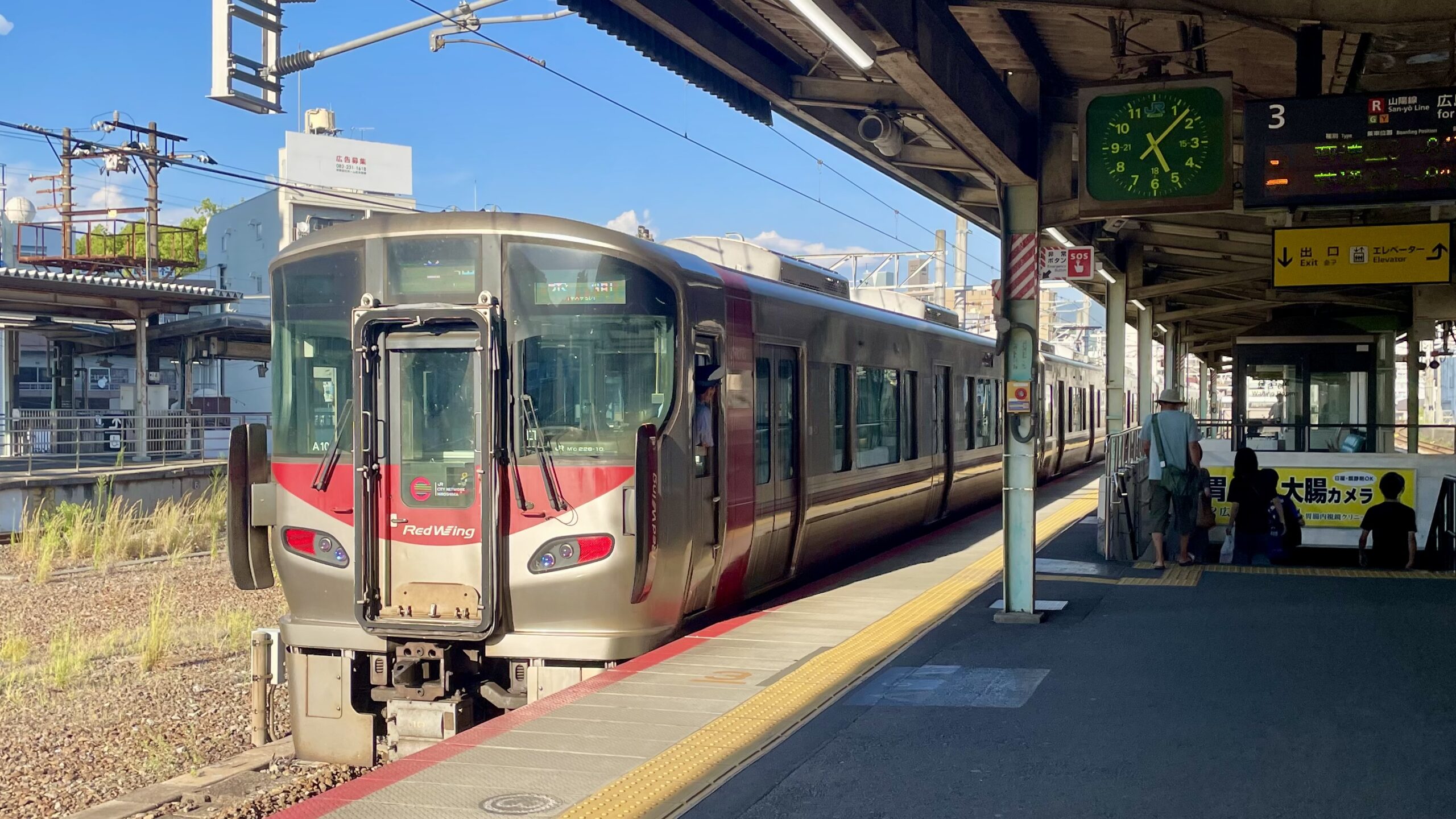
Japanese trains can feel surprisingly quiet to foreign visitors. The cars are full of people, yet hardly anyone is talking loudly. Most passengers are looking at their phones, reading, listening to music, or dozing off.
For those of us who grew up in Japan, though, this isn’t something we think about much. It’s just how trains are.
I’ve noticed it in my own behavior more than once. I’ll be chatting normally with a friend on the platform, and the moment we step onto the train, my voice quietly drops on its own. I’m not consciously thinking, “I need to be quiet now.” It just happens.
So why are Japanese trains so quiet? I want to walk through a few reasons, based on what I’ve noticed growing up here.
My Voice Just Gets Quieter on the Train
People do talk to friends on Japanese trains. There’s no rule that says “no conversation allowed” inside the car.
Still, there’s a subtle shift in atmosphere between the platform and the train itself. Say you’re talking with a friend at a normal volume while waiting on the platform. The moment you board, your voice tends to drop a little, almost without deciding to.
Look around, and you’ll usually see people quietly scrolling on their phones, listening to music, or asleep. Something about that atmosphere makes people lower their own volume to match it. If a conversation gets a little too animated and someone’s voice rises, they’ll often catch themselves — “oh, that was a bit loud” — and bring it back down.
No one told them to. No one was scolded.
I think this instinct to match the quiet around you is part of why Japanese trains feel so peaceful. For a lot of people, it’s less a rule they’re actively following and more a habit they don’t even notice anymore.
It’s Not “No Talking” — It’s “Don’t Make Others Listen”
I don’t want to give the wrong impression here: conversation isn’t banned on Japanese trains. Friends talk to each other all the time. When a train fills up with students after school, the car can get genuinely lively.
On long-distance trains like the Shinkansen, it’s common to see families or friends chatting over a meal together.
So it’s not that Japanese people avoid talking on trains. What people actually pay attention to, I think, is how much sound they’re sending out into the car.
If you’re chatting with a friend at a normal volume, that’s fine. But if you keep talking loudly enough that it carries across the whole car, you stand out immediately — because in a quiet space, one loud voice is the only thing anyone can hear clearly.
So the principle isn’t “don’t talk.” It’s “don’t talk louder than you need to.”
That distinction matters if you want to understand why Japanese trains feel the way they do. And it doesn’t stop at conversation. The same logic shows up in smaller habits:
- Using earphones or headphones to watch videos or listen to music
- Checking that sound isn’t leaking out of your earphones
- Never playing audio out loud from a phone speaker
- Keeping bags and luggage from getting in other passengers’ way
None of these are big gestures on their own. But when everyone on a train is quietly doing them at the same time, the whole car’s atmosphere changes.
“Talking Is Fine, So Why Avoid Phone Calls?”
One thing that seems to genuinely puzzle visitors is phone calls. Friends chat freely on Japanese trains, yet it’s much less common to hear someone taking a phone call. If both are technically “talking,” why is one treated so differently?
In Japan, if a call comes in while someone’s on a train, a common response is to think, “I’m on the train right now,” and call back later. If picking up is unavoidable, people often keep it brief — something like “I’m on the train, I’ll call you back” — and hang up quickly. On the Shinkansen and other long-distance trains, passengers may move to the deck or a designated space if they need to take a call.
Why does a phone call get treated so differently from an ordinary conversation? I have a few theories.
One is that with a phone call, only your voice is audible in the car. In a normal conversation, both people are physically there — you can hear each other and naturally adjust your volume to match. On a call, you can’t hear the other person, and nobody else around you can either.
If the other person’s voice is a little loud, or hard to hear over background noise, people may unconsciously raise their own voice to compensate. The result is that someone who feels like they’re talking normally can end up sounding much louder than they realize.
There’s also the fact that it’s hard to gauge how far your own voice is carrying when you’re on a call — you don’t have the same feedback you’d get from watching the person you’re talking to.
So my personal take is that part of the reason people avoid taking calls on trains is this: a phone call can carry further than you think it does, without you realizing it. That’s just my own reading of it, not an official explanation.
What is official: JR East and Tokyo Metro ask passengers to set phones to silent mode and refrain from taking calls in the car. This isn’t a legal ban — it’s closer to an etiquette guideline, rooted in consideration for the people around you.
Trains Are Where You Don’t Interrupt Someone Else’s Time
Look around a Japanese train car and there’s a small, quietly interesting scene playing out: dozens of people sharing the same space, each living in a completely different moment.
Someone’s scrolling their phone. Someone’s listening to music. Someone’s reading. Someone’s working. Someone’s got their eyes closed. Someone’s asleep.
Everyone’s just… in their own world.
I think the quietness of Japanese trains comes not only from “don’t cause trouble for others,” but from a related, slightly different instinct: don’t interrupt someone else’s time.
If the person next to you is asleep, you try not to wake them. If someone’s absorbed in a book, you don’t strike up conversation unless you have to. If someone’s quietly on their phone, you leave that moment alone. Chatting with strangers is, generally speaking, just not something that happens.
That doesn’t mean people are avoiding connection with others. It’s more that there’s an assumption — “this person might want to be left to themselves right now” — and respecting that is its own small form of consideration.
In a confined space like a train car, your actions affect the people around you more directly than usual, which is maybe exactly why people are careful not to step into someone else’s space more than necessary. The result is a paradox: a car full of people, each quietly living in their own separate world.
The Feeling of “Not Wanting to Be a Bother”
So why does consideration for others carry so much weight on Japanese trains specifically?
Japanese railway etiquette places a lot of emphasis on consideration for the people around you. This kind of consideration also appears in other everyday Japanese expressions, such as sumimasen. On the train, thoughts like these tend to run through people’s heads:
- Would talking loudly bother the people near me?
- Would taking this call be annoying to others?
- Is my bag in someone’s way?
- Is sound leaking out of my earphones?
To be clear, not every Japanese person is thinking about this perfectly, all the time. Plenty of people do talk loudly on trains, or take calls. But the fact that railway companies keep reminding passengers to be considerate of others suggests that thinking about how your behavior affects fellow passengers has become a real, ongoing part of train etiquette in Japan — even if it’s imperfectly followed.
What’s interesting is that most people aren’t consciously thinking “I must follow proper manners” each time. When I lower my voice on a train, I’m not telling myself, “I’m upholding Japanese etiquette right now.” If it’s quiet around me, I quietly match it. It’s closer to a reflex than a decision.
That’s exactly why, when a visitor points out how quiet Japanese trains are, my honest reaction is often, “Huh — now that you mention it, I guess it is.”
Japanese Trains Aren’t Actually Silent
Reading all this, you might picture Japanese trains as completely silent — nobody speaking a word, dead quiet from start to finish.
That’s not really accurate.
Babies cry. Students laugh and chat with each other. Someone sneezes loudly. There’s the sound of the train itself moving along the tracks. Station announcements play overhead. On the Shinkansen, families and friends eat and talk together over a meal.
In other words, Japanese trains aren’t silent — they’re just not loud. What makes them feel quiet, I think, isn’t an absence of sound. It’s that the sound people make tends to stay within a certain range.
When I think about this, I always end up remembering the moment right after getting off. I’ll be talking quietly with a friend on the train, and then we step out onto the platform — and somehow, without either of us noticing, our voices are back to normal.
It’s not that talking itself feels wrong on a train. It’s that, while you’re in that shared space, you’re quietly adjusting your volume with the people around you in mind. That adjustment — small, automatic, barely noticed — is what “being quiet on the train” really means to a lot of Japanese people.
Individually, none of these habits are dramatic:
- Speaking a little more softly
- Letting a call wait
- Turning down earphone volume
- Keeping bags out of the way
- Not waking a sleeping stranger
- Leaving someone’s quiet moment alone
But when a whole car full of strangers is doing these small things at the same time, the entire space becomes quiet.
So I don’t think the quietness of Japanese trains comes down to something simple like “Japanese people are just naturally quiet people.” I think it comes from something more collective: everyone sharing the same space is making small, constant adjustments so as not to intrude on each other’s time or space. That accumulation of tiny adjustments is, I think, what actually makes Japanese trains feel the way they do.
And honestly, this is the kind of thing that’s so ordinary to those of us who grew up here that we rarely think about it at all — which is exactly what makes it such an interesting entry point for anyone trying to understand Japan a little better.