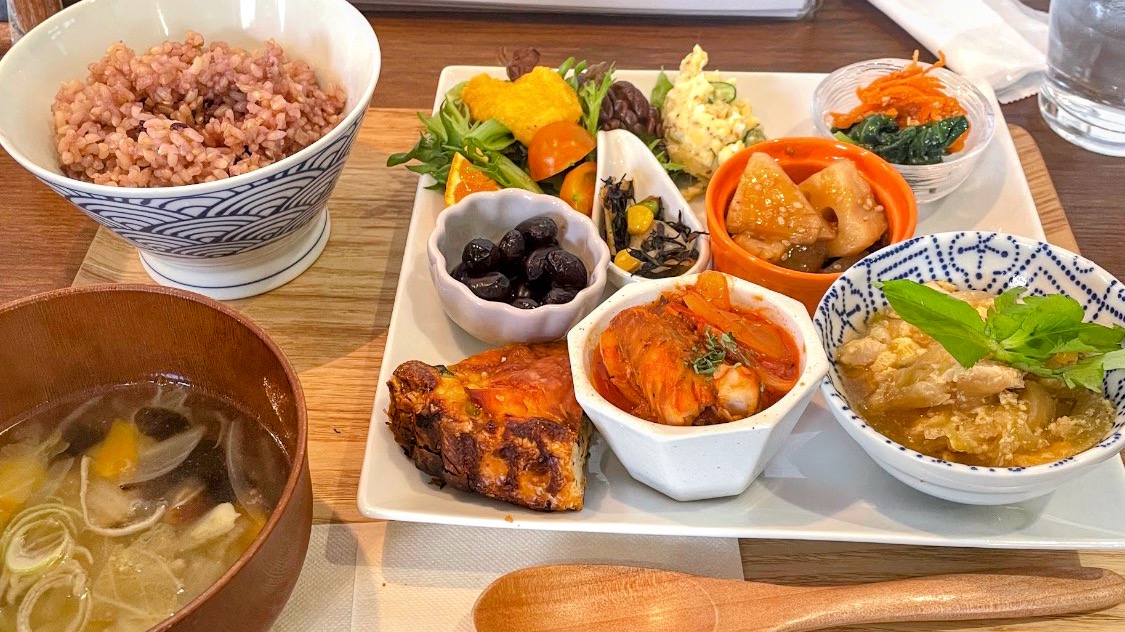
If you’ve ever shared a meal with someone in Japan, you’ve probably heard the word “itadakimasu” right before everyone starts eating.
For Japanese people, it’s such a familiar, everyday word that most of us barely think about it. But if you’re not from Japan, you might find yourself wondering: what does itadakimasu actually mean? And why do Japanese people say itadakimasu before eating?
Honestly, even for Japanese people, explaining itadakimasu in English isn’t as easy as it sounds. You could translate it as “Thank you for the food,” and that’s not wrong, exactly—but it doesn’t quite capture everything, either.
I’ve said “itadakimasu” without thinking twice about it since I was a kid. But once I started cooking for myself as an adult, I began to see the word a little differently.
In this article, I want to share how itadakimasu shows up in everyday Japanese life—not as a rule from a textbook, but as something I’ve actually lived with.
A Word You Learn Without Really Learning It
In Japan, many people pick up the habit of saying “itadakimasu” while they’re still very young.
In my case, saying it before a meal was just something I did automatically as a kid.
If I reached for my food too quickly, my parents would ask, “Aren’t you forgetting something?”—meaning, say itadakimasu first.
I never sat there as a child thinking deeply about what the word meant.
It was more like: this is just what you say before you eat.
That’s how it became second nature—through small, ordinary moments like that, rather than any real lesson about food culture.
Itadakimasu at School Lunch
The word also shows up a lot in school life.
When I was a kid, once everyone’s school lunch was set out, the whole class would say “itadakimasu” together before eating.
Dozens of kids all saying “itadakimasu!” at the same moment—at the time, it never struck me as anything culturally significant.
It was simply the thing you said before lunch.
That’s how normal it felt.
Of course, this isn’t universal. Habits around school lunch vary depending on the school, the region, and even the era, so not every classroom does this in exactly the same way.
Do People Say It When Eating Alone, Too?
So what about eating alone—do Japanese people still say itadakimasu then?
Honestly, it depends on the person.
In my case, when I’m eating out by myself, I don’t usually say it out loud.
Instead, I might just say it quietly in my head.
There’s no need for anyone around me to hear it. But I still take that small moment, mentally, before I start eating.
On the other hand, some people don’t bother with it at all when they’re eating solo.
In other words, it’s not accurate to say that Japanese people always say itadakimasu out loud, every single time.
It really varies by household and by individual.
For me personally, it’s less about whether I say it out loud and more about pausing for a second to shift my mindset before a meal.
A Quieter Voice in Restaurants
At home with family or friends, I’ll say “itadakimasu” normally, without thinking about it.
But in a restaurant, surrounded by other people, it feels a little different.
Rather than announcing it loudly, I might say it softly, or just think it silently instead.
When I’m dining alone at a restaurant, I often just say it in my head.
I think these small variations say something about how naturally itadakimasu is woven into daily life here.
It’s not a performance. It’s just a habit that bends to fit the moment.
Pressing Your Hands Together
Some people press their palms together in front of their chest when they say “itadakimasu.”
But not everyone does this. Whether someone puts their hands together really comes down to the individual or the family they grew up in.
I personally tend to feel that someone who carefully puts their hands together and says “itadakimasu” before eating seems polite and well brought up.
Of course, this is just my personal impression, and it isn’t a shared view across Japan.
Why Itadakimasu Is Tricky to Translate
If someone asks, “What does itadakimasu mean?”, how do you even answer that?
The simplest response is probably “Thank you for the food.”
And that phrase does capture part of it.
But from a Japanese perspective, it still feels like it’s missing something.
Itadakimasu is a set phrase used right before a meal, and it is often explained as expressing gratitude for the meal and for the people involved in preparing it.
But how each person interprets that meaning can differ. Not everyone attaches quite the same weight or meaning to it.
That’s exactly why it’s hard to reduce itadakimasu to a single, tidy English equivalent.
How Cooking for Myself Changed How I See Itadakimasu
As a kid, I never thought much about what itadakimasu really meant.
I said it simply because that’s what you say before eating.
But once I started cooking my own meals, my perspective shifted a bit.
Cooking means buying the ingredients, washing the vegetables, cutting them, cooking everything, and plating it.
Getting a single dish onto the table takes more effort than you’d expect.
Once I experienced that firsthand, I found myself feeling more genuine gratitude—“thank you for making this”—whenever someone else cooked for me.
I’d known the word itadakimasu for as long as I could remember, but it wasn’t until I was an adult that I actually started to think about what it meant.
A Small Habit Woven Into Everyday Life
Itadakimasu isn’t reserved for special occasions.
It comes up at home, at school lunch, out with friends, at restaurants, and even when eating alone.
How people say it—or whether they say it out loud at all—varies from person to person, but it exists quietly within the rhythm of everyday meals in Japan.
Because many of us learn it so young, we rarely stop to think about it.
But when someone asks, “Why do you say itadakimasu before eating?”, it does make me pause and think:
“Come to think of it… why do we?”
Itadakimasu is just one small word.
But packed into that single word is a mix of feelings—an appreciation for the meal itself, gratitude toward whoever made it, and a small habit that ties back to childhood.
When people think of Japanese culture, they often picture shrines, festivals, or kimono.
But culture also lives in these quiet, everyday habits.
Itadakimasu is one of those small words that quietly carries a piece of ordinary life in Japan.
Want to discover more about everyday life in Japan?
Explore more stories about Japanese culture, lifestyle, and the small everyday habits that make Japan unique.
→ Japanese Culture