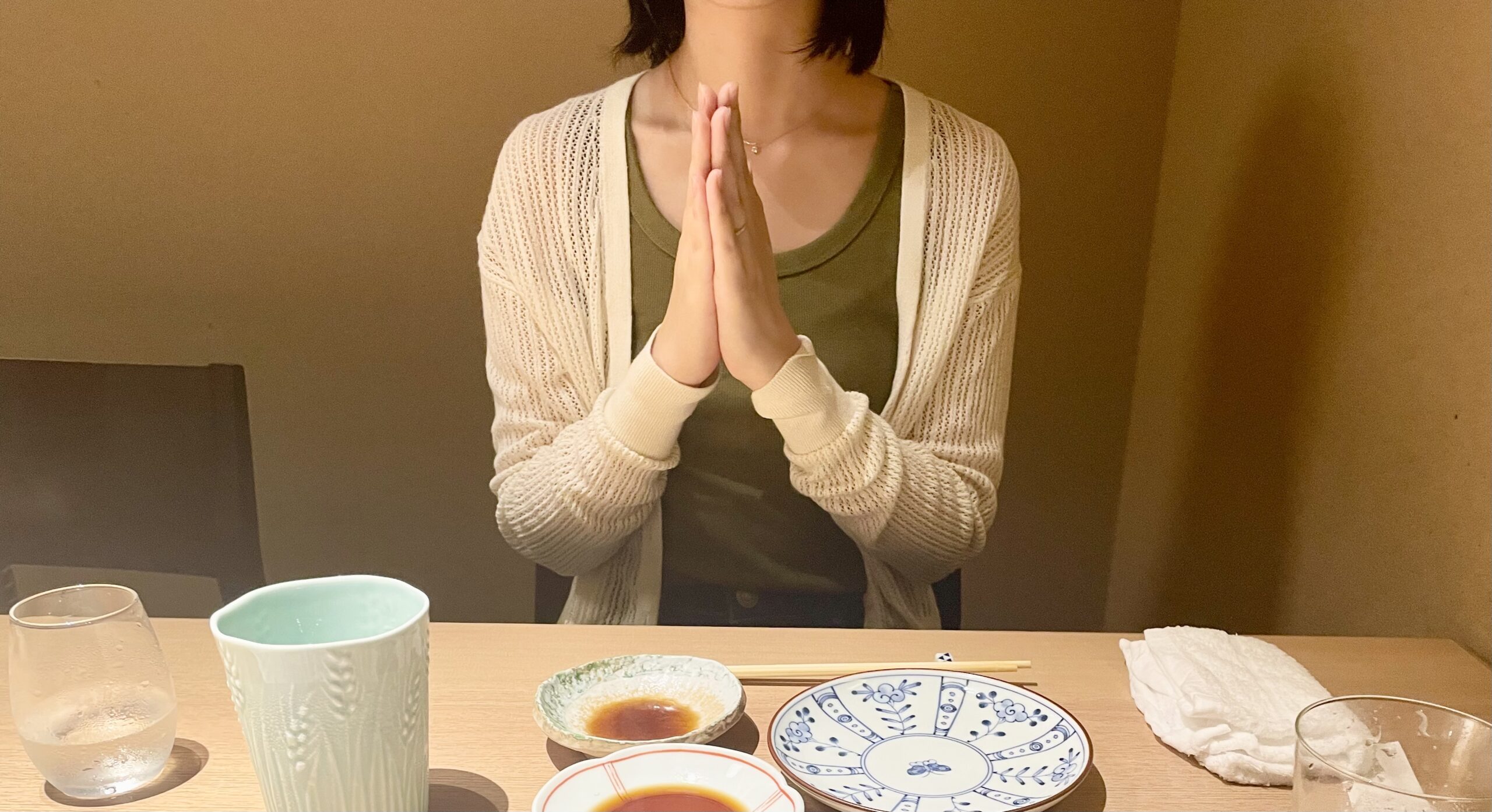
You’re in a small ramen shop in Japan. The meal is over, you already paid at the vending machine before you even sat down, nobody cooked anything for you personally, and you’re about to leave. And then the person next to you quietly says, “Gochisousama deshita,” almost to themselves, before standing up.
No one made this meal for them out of kindness. They paid for it. They probably ordered it from a machine. So why say it at all?
That question is a good place to start, because “gochisousama” isn’t only about thanking a specific person for a specific meal. For many Japanese people, it’s also just what you say when a meal is finished — whether or not there’s anyone around to hear it.
What Does “Gochisousama” Mean?
It Doesn’t Have One Perfect English Translation
“Thank you for the meal” is the explanation you’ll see most often, and it’s not wrong. But it’s not quite right either. English doesn’t really have an equivalent phrase that people say automatically, every day, after basically every meal — including meals they made and paid for themselves. That gap is part of why the phrase can feel confusing to translate. It’s closer to a fixed, almost ritual expression than a sentence you’re actively constructing to thank someone.
What Does “Gochisou” Mean?
The word breaks down into “gochisou” (ご馳走) plus “sama” (様), an honorific ending.
“Gochisou” traces back to “chisou” (馳走), which originally meant running around, or going to considerable effort to get something done. In pre-modern Japan, that sense got tied specifically to preparing food for a guest: someone going out and running around to gather ingredients and put together a proper spread. Over time, that idea of effortful preparation shifted to mean the meal itself, especially a generous or special one, and eventually the hospitality behind it too (Gogen-Yurai Jiten). Add the honorific “go” and “sama,” and the phrase becomes a respectful way of acknowledging that effort.
So at its root, “gochisousama” is tied to the work behind a meal, not just the food on the table.
When Do Japanese People Say “Gochisousama”?
At Home
In my house, I say “gochisousama” every single time I finish eating — even when I’m the one who cooked. It’s not something I think about. It’s just what marks the end of a meal.
At Restaurants
This isn’t limited to home cooking. I say it at ramen shops, at fast food places, at cafés. It doesn’t matter whether someone handed me a home-cooked plate or I ordered off a menu and paid for it myself. The phrase still comes out, usually quietly, sometimes just to myself as I’m getting up.
Even When You’re Eating Alone
I say it when I eat alone, too. If no one else is around, I’ll actually say it out loud. If I’m somewhere with other people nearby, I might just say it in my head instead of out loud, but the moment still happens.
This is probably the part that surprises people the most. If “gochisousama” were purely about thanking another person, there’d be no reason to say it with nobody there to hear it. But I do exactly that, too.
Why Say It When You Paid for the Meal Yourself?
It’s Not Simply “Thank You for Paying”
If you translate “gochisousama” as a straightforward “thank you for paying for this,” it stops making sense the moment you paid for it yourself. So that’s not really what’s happening. The phrase isn’t tracking who handed over the money.
Sometimes It’s Just a Habit
Honestly, most of the time when I say it, I’m not thinking about gratitude at all. It’s closer to something automatic — the verbal equivalent of pushing your chair in. The meal is done, so you say it. That’s the whole thought process, or lack of one.
But Gratitude Becomes More Personal When Someone Treats You
That said, the phrase isn’t empty. When someone actually treats me to a meal, saying “gochisousama” feels different. It’s still the same words, but the meaning shifts — it stops being background habit and becomes something I’m saying directly to that person, about what they just did for me.
So the same three words can function two different ways depending on the situation: as a routine closing to a meal, or as real, directed gratitude. Context does most of the work.
Gochisousama and Itadakimasu
If you’ve come across “itadakimasu,” the phrase Japanese people often say before starting a meal, “gochisousama” is its natural counterpart. One opens the meal, the other closes it.
For me personally, the two go together as a pair — I don’t really think of saying one without the other. That’s just how it works in my own daily life, not a rule that every Japanese person follows the same way. If you want to go deeper on the phrase that starts the meal, I’ve written more about why Japanese people say “itadakimasu” before eating.
Why Does It Feel Strange Not to Say It?
If I leave a restaurant without saying “gochisousama,” it feels off. Not like I broke a rule — more like I forgot to do something small that should have happened. I usually catch myself and say it before I walk out.
Part of that probably comes from how I grew up. My parents told me to say it properly as a kid, and it was reinforced at school too. It became one of those phrases that gets repeated so often growing up that it stops feeling like a choice and starts feeling like it’s just part of finishing a meal.
I want to be careful here, though: this is how it feels to me, not a claim that every Japanese person feels a pang of guilt if they skip it. Plenty of people say it without thinking twice, and plenty probably don’t say it every time. It’s less a strict social requirement and more a habit that a lot of people grew up with.
Is “Gochisousama” About Gratitude for Food?
There’s another layer to the phrase that goes beyond people — gratitude toward the food itself. Day to day, I’m not walking around consciously thinking about this every time I eat. Most meals, I’m just saying the phrase out of habit, the way described above.
But every so often, it does cross my mind that a meal exists because an animal — a cow, a pig, a chicken — didn’t. That awareness isn’t constant for me, and I wouldn’t say it’s the main reason I say “gochisousama” on a random Tuesday. It’s more like an occasional layer underneath the habit, not the whole explanation.
How Do You Say “Gochisousama”?
Gochisousama — the casual version, used with family, friends, or in relaxed settings.
Gochisousama deshita — a more polite form, commonly used when thanking someone directly after a meal, such as a host, or in more formal situations like a business meal.
The choice between the two generally follows the same logic as other polite/casual pairs in Japanese: who you’re with, and how formal the setting is.
So Why Do Japanese People Say It?
“Gochisousama” isn’t simply the Japanese way of saying “thank you for the meal.” For me, it’s a few things layered on top of each other: a habit that marks the end of eating, a way of acknowledging someone’s effort when they cooked or paid, and something closer to real, direct gratitude when someone treats me.
Most of the time, I’m not saying it with any of that consciously in mind. It’s just what comes out when a meal is finished. But leave it unsaid, and something still feels a little incomplete.