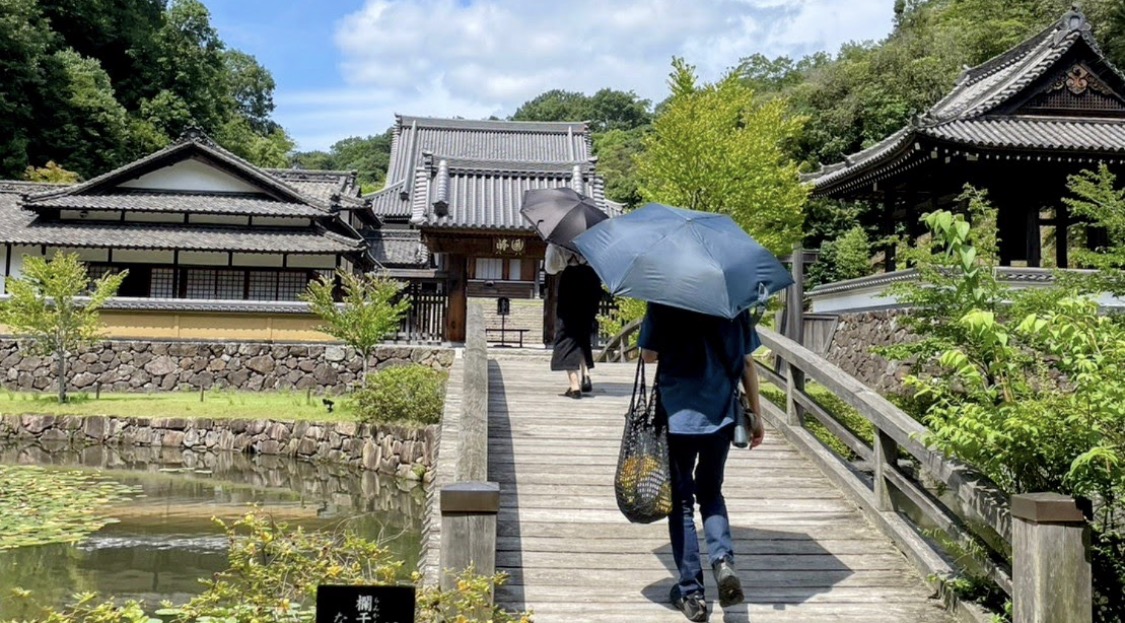
Walk around Japan in the summer, and you might notice something a little unusual.
The sky is clear. The sun is blazing. And yet, people are walking around with umbrellas open.
They’re not shielding themselves from rain. They’re using a parasol — what’s called a higasa in Japanese.
Parasols have become a familiar sight in Japan, particularly among women. And compared with the past, more men are carrying them too.
So why do people in Japan open an umbrella on a perfectly sunny day?
There’s no single answer. For some, it’s about escaping the heat. For others, it’s about protecting their skin from UV rays. And for many people, using a parasol has simply become one practical way to get through the Japanese summer.
I’m Japanese, and I’ve been using a parasol for years. So in this article, I’ll share what parasols mean in my everyday life and what I’ve noticed about how their use is changing in Japan.
Japanese Summers Are Brutally Hot
One of the biggest reasons people use parasols is simple: the heat.
Japanese summers are hot and humid, and even a short walk outside can leave you drenched in sweat. When the sun is strong, walking without shade can feel exhausting.
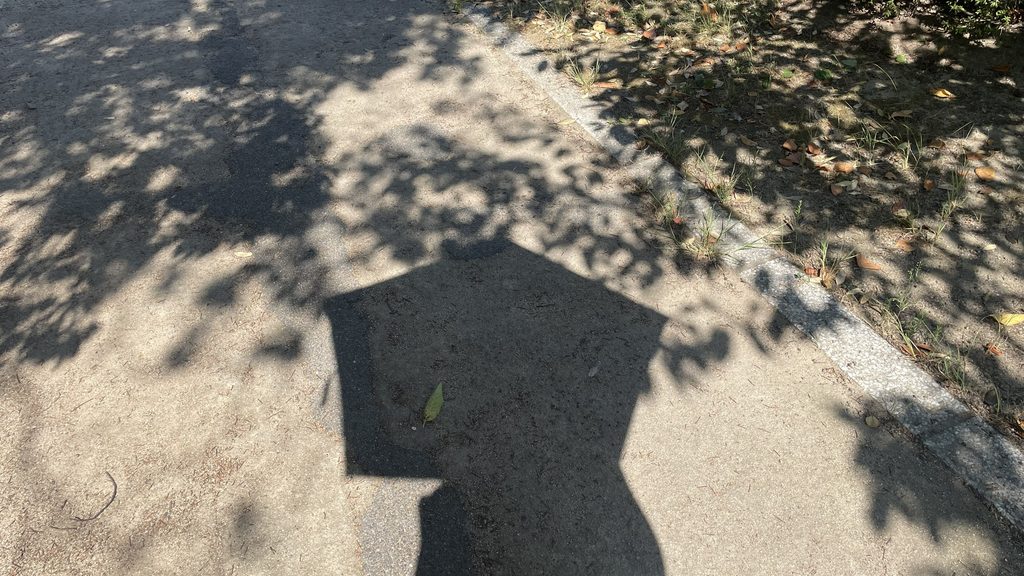
That’s where a parasol helps. It blocks direct sunlight and gives you your own little area of shade while you’re walking.
I remember one summer day when I really appreciated having mine.
I was waiting in line outside a restaurant, and there was no shade around the entrance. I had to stand outside under the strong sun, but my parasol kept the direct sunlight off me.
I remember thinking:
I’m so glad I brought this.
That’s one of the things I like most about using a parasol. It almost feels like carrying your own patch of shade with you.
And this isn’t just a personal preference. Japan’s Ministry of the Environment recommends using parasols as one measure to help prevent heatstroke.
If you’re visiting Japan for the first time in summer, a parasol can be a surprisingly useful item. You may have heard that Japanese summers are hot, but walking around outside in the middle of summer can be very different from simply hearing about it.
A little portable shade can make the experience much more comfortable.
It’s Not Just the Heat — Parasols Also Protect Against UV Rays
Heat isn’t the only reason people use parasols.
For some people, avoiding sun exposure and protecting their skin from UV rays are important too.
People may use sunscreen, hats, long sleeves, or parasols to reduce their exposure to the sun. The reasons vary from person to person, but beauty and skincare can certainly be part of the motivation.
For me, it is.
I’ve always wanted to avoid getting tanned, and I’ve always liked the look of fair, glowing skin. That’s one of the reasons I started using a parasol in the first place.
A parasol doesn’t replace sunscreen, of course, but it helps keep direct sunlight off my face and arms.
So while staying cool is a major benefit, UV protection is another reason I personally don’t like going outside in summer without one.
My Own Relationship With the Parasol
I started using a parasol around my college years.
At the time, many of my friends were becoming more interested in skincare and beauty, and I noticed more of them carrying parasols. Seeing that made me want to try one too.
For me, avoiding a tan was the biggest motivation.
These days, I use a parasol almost everywhere I go during summer — commuting to work, shopping, traveling, or simply going out.
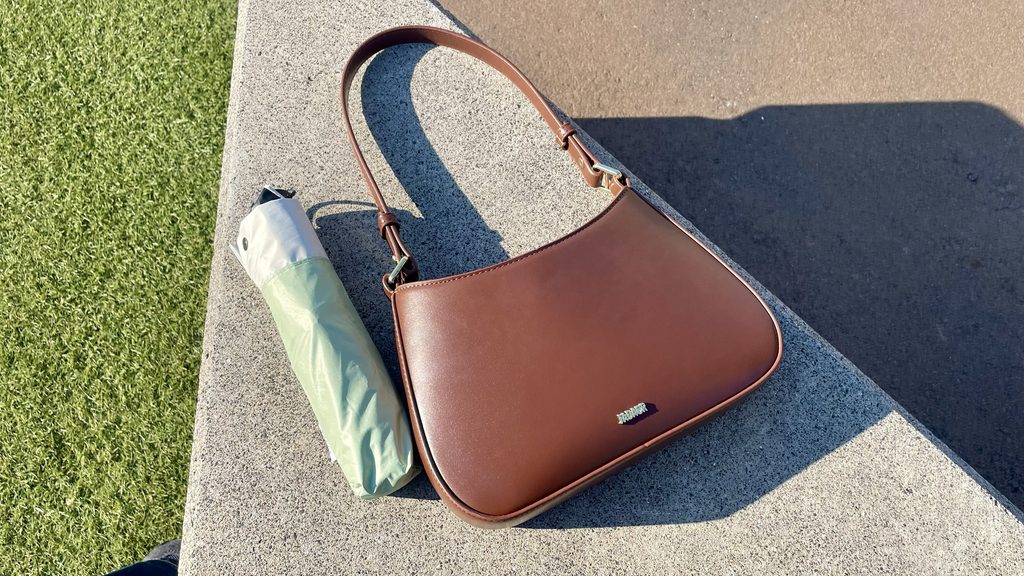
I own both a folding parasol and a long one. Both are the type that can also be used as regular rain umbrellas, which makes them especially convenient during Japan’s unpredictable summer weather.
By now, using a parasol has become such a habit that forgetting it genuinely bothers me.
If I realize I’ve left it at home and going back is possible, I’ll actually turn around and get it.
That’s how much of a normal part of my summer routine it has become.
What started as something I picked up in college has become one of those small everyday habits I hardly think about anymore.
More Men Are Carrying Parasols Now
One of the biggest changes I’ve noticed is the growing number of men using parasols.
When I was a child, I almost never saw men carrying them.
Back then, my image of a parasol was very different. I associated them mainly with older women.
Because of that, I imagine some men may have felt self-conscious about using one in the past.
That image has gradually changed.
There’s even a term in Japan, higasa danshi, used to describe men who use parasols. Men still use them less often than women, but compared with when I was a child, I definitely notice them more often.
My own father is a good example.
He recently bought a parasol for himself.
When I was growing up, the idea of my father buying a parasol for himself would have seemed almost unimaginable.
So when he came home with one, I remember thinking:
“Times have really changed.”
I think heat is probably a major reason many men choose to use parasols. As Japanese summers become increasingly difficult to deal with, having some protection from the sun can simply make being outside more comfortable.
At the same time, some men who are particularly interested in skincare may also use parasols for UV protection.
To me, the interesting part isn’t that every man now uses a parasol. They don’t.
It’s that using one is becoming an increasingly acceptable choice for men too.
The old idea that “parasols are for women” seems to be giving way to something much simpler:
If it’s hot, why not use one?
Not Everyone in Japan Uses a Parasol
Of course, not everyone in Japan carries a parasol.
They’re useful, but they’re also one more thing to carry around.
Some people don’t like having an extra item in their hands. Others find parasols inconvenient in crowded places or simply prefer sunscreen, hats, UV-protective clothing, or other ways of dealing with the sun.
Among the people I know, parasols are quite common, especially among women. But whether someone uses one really comes down to personal preference.
So I wouldn’t say that every Japanese person considers a parasol an essential part of summer.
Rather, it’s become a familiar option for dealing with the heat and strong sunlight, and that option seems to be becoming more common among both women and men.
A Small Thing I Keep in Mind When Using Mine
There’s one thing I personally try to remember when I’m using a parasol: other people are walking around me too.
In crowded areas or on narrow streets, an open parasol can easily get in someone’s way.
When I’m passing someone on a narrow path, I’ll sometimes close mine or tilt it slightly so I don’t bump into them.
It’s a small thing, but I think it’s worth remembering.
A parasol can make my own walk more comfortable, but that doesn’t mean I should forget about the people around me.
This isn’t a rule that every Japanese person follows. It’s simply something I personally try to do.
What About Other Countries?
So what about parasols outside Japan?
The way people use parasols varies widely depending on the country and region. Different places have different climates, attitudes toward sun exposure, and everyday customs.
For someone visiting Japan for the first time, seeing people walking around with open umbrellas under a clear sky may seem unusual.
For Japanese people who are used to seeing parasols in summer, however, it usually isn’t particularly remarkable.
The interesting thing is that it’s the same basic object — an umbrella — but used for a completely different purpose.
Not to keep rain off.
To keep the sun off.
And I think that small difference is a nice example of how everyday habits can reflect the climate and lifestyle of a country.
A Small Way to Make Japan’s Summer More Comfortable
So, why do Japanese people use parasols?
There isn’t just one answer.
Some people use them to escape the heat. Some want to reduce their exposure to UV rays. Others simply find them useful and have incorporated them into their summer routine.
For me, it’s all of those things.
I started using a parasol because I didn’t want to get tanned. But after years of carrying one, I can’t imagine spending a hot summer day without it.
And one of the things that has surprised me is seeing how the image of the parasol has changed.
When I was a child, I associated parasols mainly with women. Now, I see more men using them too — including my own father.
A parasol isn’t something everyone in Japan uses, and it certainly isn’t a requirement for surviving summer.
But for me, it’s one of the simplest ways to make a hot day a little easier.
It’s basically a little piece of shade that I can carry with me wherever I go.
If you visit Japan during the summer, try using one yourself.
You might be surprised by just how much difference a little shade can make.