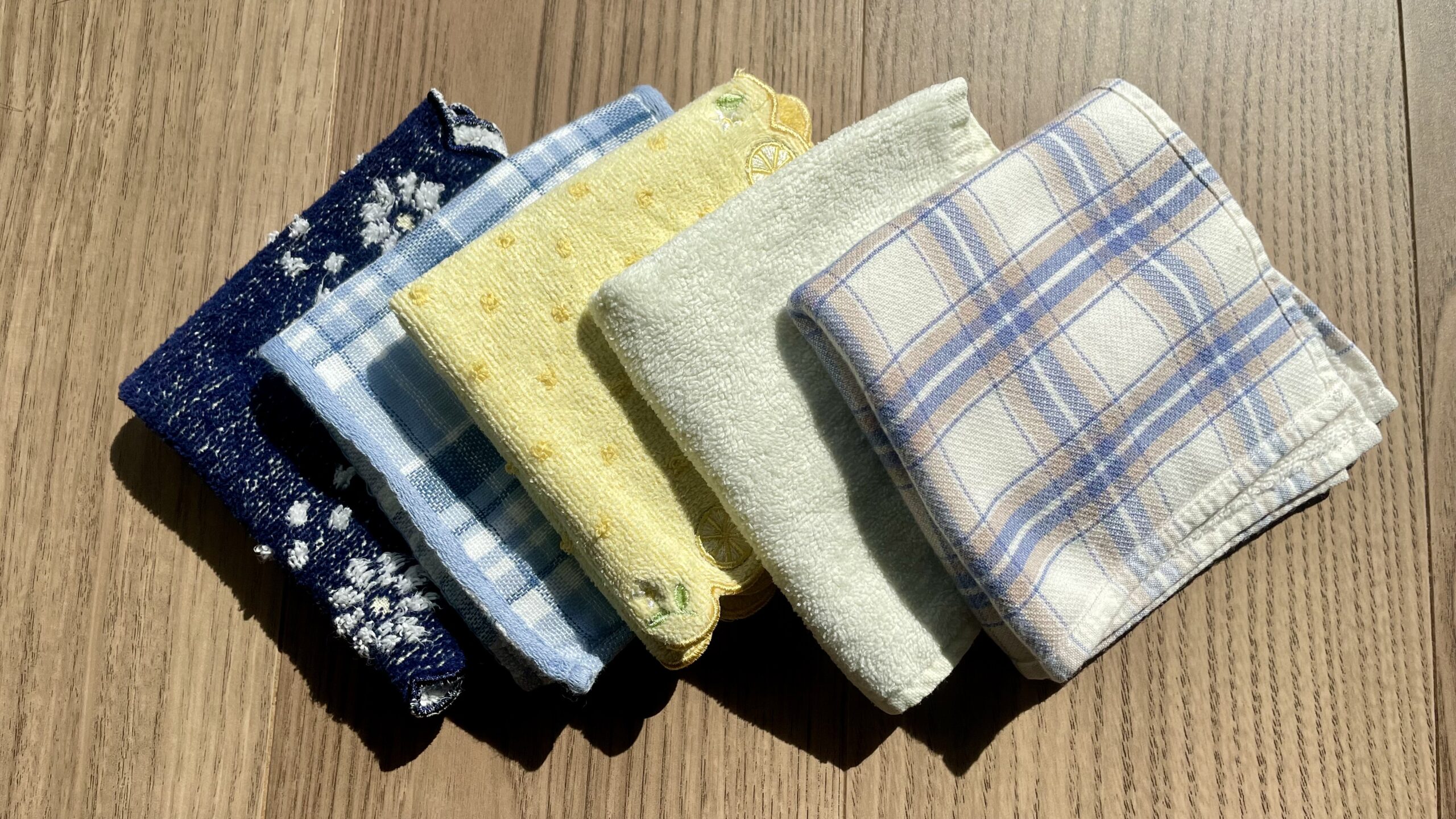
If you spend some time in Japan, you’ll probably notice something small but consistent: many people here carry a handkerchief with them. As a visitor, you might wonder why. A handkerchief in Japan isn’t just something to dry your hands with — for a lot of people, it’s a habit that goes back to childhood.
Many Japanese people grow up carrying a handkerchief from a young age, and for some, that habit continues into adulthood, tucked into a bag right alongside a wallet and a smartphone. This is really what Japanese handkerchief culture looks like day to day — less a formal tradition, more a small routine that sticks.
Of course, not every Japanese person carries one. It depends a lot on generation and lifestyle. But for me, this small item has been part of daily life for as long as I can remember, so I wanted to share what a handkerchief actually means to someone who grew up with it.
A Habit That Started With “Did You Bring Your Handkerchief?”
When I was a kid, right before leaving the house, my mom would often ask, “Did you bring your handkerchief?”
Having a handkerchief and a small pack of tissues in my bag on the way to school was just normal. Looking back, it never felt like I was being taught something important at the time. But after hearing that question and repeating the same routine day after day, carrying a handkerchief slowly became second nature.
At some kindergartens and elementary schools in Japan, children are expected to bring a handkerchief and tissues as part of their daily school supplies. So for Japanese children, a handkerchief becomes a familiar part of everyday life from a very young age.
Handkerchiefs Were Part of School Life Too
For me, a handkerchief wasn’t just a household habit. It was part of school life as well.
At school, there are a lot of chances to wash your hands. During break time, after PE class, and before lunch, you might wash your hands and then dry them with your own handkerchief.
Because of that, a handkerchief never felt like a stylish little accessory. It felt more like a basic everyday item you’d been using since you were small.
Repeating this kind of routine throughout childhood is probably part of why carrying a handkerchief starts to feel so natural.
Even Now as an Adult, I Still Check for My Handkerchief Before Heading Out
Habits that start in childhood don’t always disappear once you grow up. For me, before I leave the house, I still run through a quick mental checklist: wallet, smartphone, handkerchief.
It’s not that I literally can’t leave the house without one. But if I don’t have a handkerchief on me, I feel a little uneasy. I start thinking, “If I wash my hands somewhere, what am I going to dry them with?”
It’s a little funny when I think about it. Something that felt like such a normal, unremarkable habit as a kid is still quietly there in my adult life.
A Handkerchief Isn’t Just for Drying Your Hands
The most obvious use, of course, is drying your hands. In public restrooms, the facilities available for drying your hands can vary. Having your own handkerchief means you always have something you can use.
But drying your hands isn’t the only use. People also wipe away sweat on a hot day, lay one across their lap during a meal, or dab at something in a pinch.
Summers in Japan tend to be hot and humid, so many people carry a towel handkerchief specifically for wiping sweat. This thicker, more absorbent style is a common sight in Japan and a genuinely practical choice for daily life here.
Old Handkerchiefs Sometimes Get a Second Life
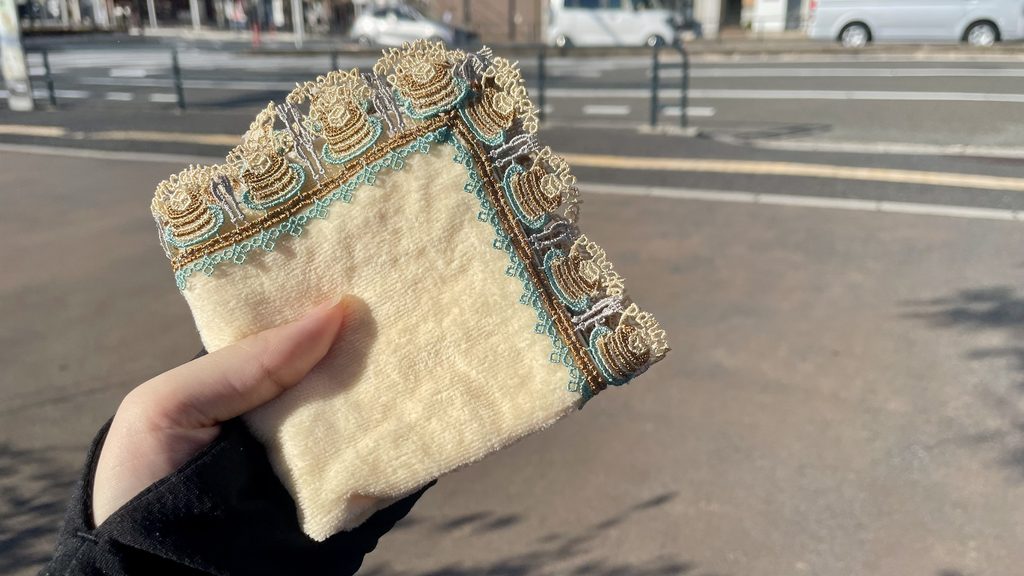
The longer you use a handkerchief, the more worn it gets. But instead of throwing it away right away, some people give it a second purpose, like turning it into a cleaning cloth.
I do this myself sometimes. Once a handkerchief has been part of my daily life for so long, using it a little longer in a different way — even after it’s too worn to carry around — feels like a natural next step.
This obviously isn’t something every Japanese person does. But the idea of giving something a second use instead of tossing it out once it looks a bit worn is a mindset that feels very familiar in my own daily life.
A Handkerchief Also Makes a Nice Small Gift
In Japan, a handkerchief can also make a practical small gift. It works well as a birthday present for a friend, a thank-you gift, or just a small token of appreciation.
Part of the appeal is that a handkerchief is compact and genuinely useful, which makes it easy to give without it feeling like too much. You’ll also find handkerchiefs in Japan in all kinds of designs, from simple and understated to cute patterns, seasonal motifs, and designs with a distinctly Japanese feel.
So when you’re not sure what small gift to bring, a Japanese handkerchief can be an easy answer. It could even make for an interesting souvenir if you’re looking for something to bring back for a friend abroad.
If you’re curious about another Japanese gift-giving tradition, you can also read about Japanese omiyage culture. Japanese omiyage culture
If you want some concrete ideas of what to actually buy, here’s a few Japanese handkerchief brands worth a closer look.
Even So, Not Every Japanese Person Carries One Today
There’s one thing worth being clear about here: it’s not that all Japanese people carry a handkerchief. That would be an overstatement.
These days, plenty of people don’t carry one at all. Hand dryers are becoming more common in public restrooms, and some places provide paper towels. Habits also vary a lot by generation.
For someone who was taught to carry a handkerchief since childhood, it can feel like second nature. For someone who never grew up with that habit, it’s simply not a necessity. Like a lot of things, everyday life in Japan keeps gradually changing.
A Handkerchief Is One Small Piece of Everyday Life in Japan
From the outside, seeing someone carry a small piece of cloth every day might seem like a curious little quirk. But for some Japanese people, it looks something like this: being asked “Did you bring your handkerchief?” as a kid, using one throughout school, and still automatically tucking one into a bag before heading out as an adult.
A handkerchief itself is such a small object. But packed into it is a bit of school life, family habits, everyday manners, hot summer days, and even a small gift-giving tradition — all woven into daily life in Japan.
Japan isn’t only shrines, temples, and Mount Fuji. Sometimes it’s the small, everyday things — the ones most Japanese people never really think about — that show you what life here is actually like.
To me, a handkerchief isn’t some special piece of Japanese culture. But looking back, it’s been quietly there since childhood, right through to today — one small, familiar part of everyday life in Japan.